
A ROYAL FOUNDATION
Did you know that The Capital Grille Waikīkī sits on storied land and pays tribute to some of Hawai’i’s most revered ali’i (royalty)? To understand how and why, let’s take a brief step back in time.
Although the busy streets and towering hotels of modern-day Waikīkī don’t seem on the surface like they’d have any connection with the past, Waikīkī has long been a place for Hawaiian ho’okipa (hospitality). The ali’i were known to relax and entertain their guests (and yes, surf) here, surrounded by the lush tropical landscape, which included coconut groves, taro patches, and fish ponds from which they’d source fresh ingredients for a truly local feast.
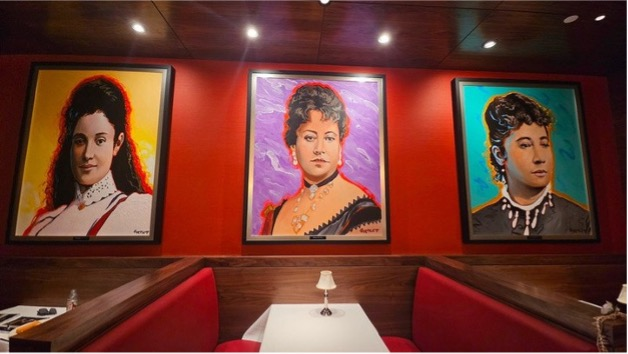
The Capital Grille Waikīkī now sits on land originally owned by Queen Emma Kaleleonālani, whose portrait graces the wall of our main dining room. The wife of King Kamehameha IV, Queen Emma, was known for her compassion, intellect, and dedication to the well-being of Native Hawaiians. Have you heard of Queen’s Hospital here in Honolulu? Well, it also has royal roots: Queen Emma co-founded The Queen’s Hospital in 1859 to care for the Hawaiian people. Now, her legacy lives on as her lands continue to generate income for The Queen’s Health Systems, a nonprofit health care organization that has grown to six hospitals and 150 health care centers throughout the Pacific.
Queen Emma is just one of the many important historical figures you’ll find featured at The Capital Grille Waikīkī. (If you’re a fan of surf legend Duke Kahanamoku, head to our lounge where you can sip cocktails under his colorful portrait). Each portrait was custom-created by artist Harley Bartlett, in collaboration with the Bishop Museum (another tip: the museum is a fantastic place to dive further into Hawaiian history while you’re in Honolulu). When the Capital Grille Waikīkī opened in September 2025, during the first official Hawaiian History Month, a traditional Hawaiian blessing of the portraits was held to honor our aliʻi, and proceeds from opening events were donated to Bishop Museum.
This tradition of paying homage to historical figures is not new to The Capital Grille; it’s a longstanding hallmark of the brand—The Capital Grille displays portraits of local people in all of its restaurants around the world. But this is the only location where you’ll find a royal foundation.
In modern times, we may never know what it was truly like to experience Waikīkī as Hawaiian ali’i. But you can get a taste of ho’okipa, a glimpse of the past, and be treated like royalty when you dine at The Capital Grille Waikīkī.
If you’d like to learn more about our ali’i, check out the profiles below. And be sure to take a walk around the restaurant when you dine with us, admire the portraits, and pay your respects to our local legends.
NĀ ALIʻI
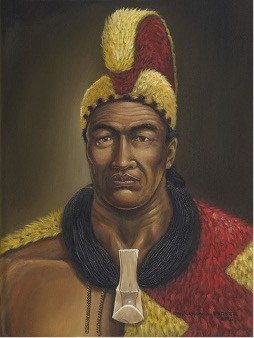
Kamehameha The Great
(c. 1758-1819)
Kamehameha the Great, or Kamehameha I, was born in secret and buried in secret. A bright star with a long tail appeared during his birth, so it is assumed he was born in November 1758 at the time of Halley’s comet.
Kamehameha, meaning “The Lonely One,” was a man of powerful physique, agile, fearless and skilled in warlike, as well as peaceful, exercises. He also had a strong mind and was an excellent judge of men. He was ruthless in war, but kind and forgiving during times of peace. He inspired loyalty and respect and kept the ways of his culture while also adopting new ideas.
Kamehameha united the Hawaiian Islands into a single kingdom in 1810. His leadership ended years of conflict and laid the foundation for a centralized Hawaiian government. Through a combination of military strength, diplomacy, and vision, he brought peace and stability to the islands.
Beyond his role as a conqueror, Kamehameha was known for his forward-thinking governance. He implemented laws to protect the vulnerable, most notably the Law of the Splintered Paddle, which safeguarded noncombatants and remains a powerful symbol of justice in Hawaiʻi today. He embraced foreign technology and advisors to strengthen the kingdom but was also deeply committed to preserving Hawaiian traditions and identity.
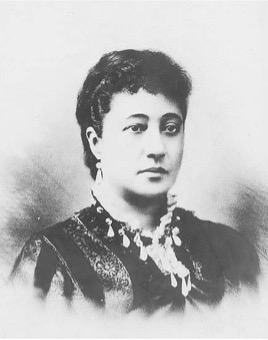
Princess Bernice Pauahi Bishop
(1831-1884)
Princess Bernice Pauahi Bishop was the great-granddaughter of King Kamehameha I and the last royal descendant of his direct line. She was educated by Christian missionaries in English, and was said to be an excellent student and a brilliant conversationalist on many subjects. She also loved music – she played the piano and sang, as well as the outdoors. Horseback riding was her favorite sports.
She fell in love with American businessman Charles Reed Bishop, and they quickly became the social and cultural leaders in Honolulu. Despite being offered the throne, she declined the crown and instead chose to serve her people through education and philanthropy. Pauahi and Charles loved children but never had any of their own. Upon her passing, she left her vast estate, much of it passed on to her by her cousin, Princess Ruth Ke‘elikōlani, to establish the Kamehameha Schools — an enduring gift to Native Hawaiian children.
Pauahi recognized the dramatic changes facing Hawaiian society in the 19th century. As the Hawaiian population declined and Western influence grew, she believed education would be the key to helping her people adapt while maintaining their identity. Her vision led to one of the largest private educational trusts in the world, focused on uplifting Native Hawaiians academically, culturally, and spiritually.
Today, Bernice Pauahi Bishop’s impact can be seen across generations. Her generosity and foresight continue to empower young Hawaiians through education, and her name remains synonymous with legacy, leadership, and love for her people.
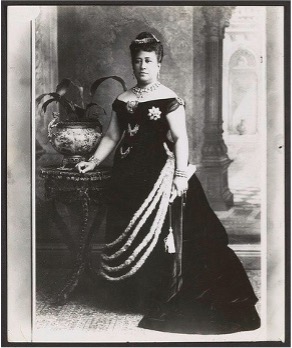
Queen Kapiʻolani Napelakapuokakaʻe
(1834-1899)
Julia Napelakapuokakaʻe Kapi‘olani was born in Hilo, Hawaiʻi. Her father was high chief Kūhiō, and her mother Kinoiki was the daughter of King Kaumualiʻi of Kauaʻi (who negotiated peace with Kamehameha I to unify the islands in 1810.)
She married David Kalākaua in1863. When Kalākaua was elected to replace the deceased King Lunalilo in 1874, Kapiʻolani became his Queen and reigned for nearly seventeen years.
In April 1887, Queen Kapiʻolani and Princess Liliʻuokalani traveled to England to participate in the celebration of Queen Victoria’s Golden Jubilee. They first sailed to San Francisco, traveled by train across the North American continent, spent some time in Washington and New York, and then sailed to England.
Upon their return from Europe, Queen Kapiʻolani and her entourage stopped again in Washington, DC. At that time, they toured the National Museum, later to become the Smithsonian Museum of Natural History. As a result of that visit, Queen Kapiʻolani gifted the museum with a Hawaiian outrigger canoe to add to their collection.
Kapiʻolani made headlines when President and Mrs. Grover Cleveland hosted a formal state dinner at the White House in her honor.
She also visited schools, hospitals, and other public institutions in San Francisco, Washington DC, Boston, and New York. As the first queen to visit the United States, her activities received extensive coverage in various U.S. newspapers.
In 1890, she established the Kapiʻolani Maternity Home, which is today the Kapiʻolani Medical Center for Women and Children. Kapiʻolani passed away in 1899 at sixty-four years of age, at Pualeilani, her modest home in Waikīkī. Kapiʻolani Park was named in her honor.
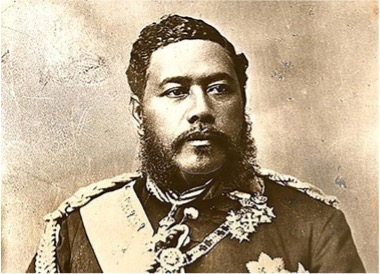
King David Kalākaua
(1836-1891)
King David Kalākaua, often called the “Merrie Monarch,” was known for his love of music, culture, and national pride. His name translates to “The Day of Battle,” which is quite appropriate, as his reign was a constant battle between Hawaiian traditions and Western influence.
Kalākaua ascended the throne in 1874 and worked tirelessly to restore Hawaiian traditions that had been suppressed, including hula, chants, and other cultural practices. His support for the arts sparked a renaissance that helped preserve Hawaiian identity during a time of great change.
Kalākaua also embraced modernization. He traveled the world — becoming the first monarch to circumnavigate the globe — and sought new ideas to strengthen Hawai‘i’s sovereignty. His reign was marked by efforts to build international ties, invest in infrastructure, and develop a strong Hawaiian national identity.
Though his later years were marked by political struggles, King Kalākaua’s influence and legacy endure. Today, he is remembered as a true renaissance man and visionary leader who celebrated his people’s heritage while navigating the challenges of a changing world. The annual Merrie Monarch Festival in Hilo honors his legacy by showcasing the beauty and power of Hawaiian hula, music, history and culture.
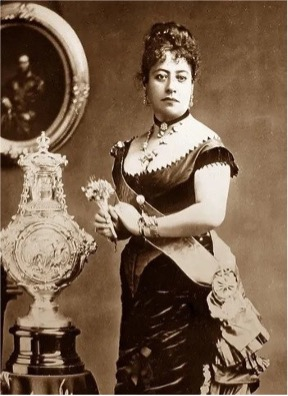
Queen Emma Kaleleonālani
(1836-1885)
Queen Emma was born in 1836, in Honolulu. She was taken as a hānai by her mother Fanny’s younger sister, Grace Kamaʻikuʻi Young and Doctor Samuel Rooke.
Queen Emma was the wife of King Kamehameha IV, and a beloved leader known for her compassion, intellect, and dedication to the well-being of Native Hawaiians. She and her husband had a loving and affectionate marriage, marked by shared devotion to their people and their son Prince Albert. After the tragic loss of Prince Albert, and witnessing the devastation of foreign diseases, she co-founded The Queen’s Hospital in 1859 to provide care for her people. Today, it stands as Queen’s Medical Center — Hawaiʻi’s largest hospital.
A devout Anglican, Queen Emma also played a key role in establishing the Episcopal Church in Hawaiʻi and founding St. Andrew’s Cathedral and School. Her commitment to education and spiritual growth shaped the kingdom’s cultural and moral framework during a time of great transition.
Even after her husband’s death, she remained active in public life and nearly became monarch herself in 1874. Though she lost the election to King Kalākaua, Queen Emma was admired for her grace, strength, and lifelong dedication to her people. Her legacy is one of healing, resilience, and aloha.
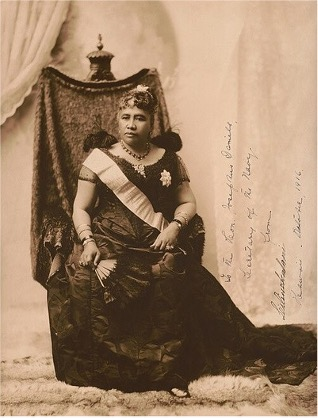
Queen Lydia Kamaka‘eha Liliʻuokalani
(1838-1917)
Queen Liliʻuokalani was the first and only queen to rule Hawaiʻi, and the last reigning monarch of the Hawaiian Kingdom. She was a powerful symbol of resistance and dignity. A gifted student, she grew to be an accomplished author, musician and composer. Liliʻuokalani created iconic Hawaiian songs like “Aloha ‘Oe” while also serving as a leader with deep care for her people. Her reign began in 1891, but she was overthrown just two years later in a U.S.-backed coup. To avoid the bloodshed of her people, she stepped down from the throne peacefully on January 17, 1893.
Despite the political upheaval, Liliʻuokalani chose peaceful resistance, writing and petitioning for justice on behalf of her people. She spent years fighting diplomatically to restore the kingdom, sacrificing her own freedom at times. Her strength and grace during her imprisonment at ʻIolani Palace earned her admiration from both Hawaiians and international allies. To protect others from punishment, she formally abdicated her throne on January 24, 1895. She died on November 11, 1917, at the age of 79, at her home, Washington Place.
Today, Queen Liliʻuokalani is remembered not only for her political legacy but for her unwavering commitment to aloha, justice, and sovereignty. Her memory lives on through her music, advocacy, and the many schools, foundations, and cultural movements that bear her name.
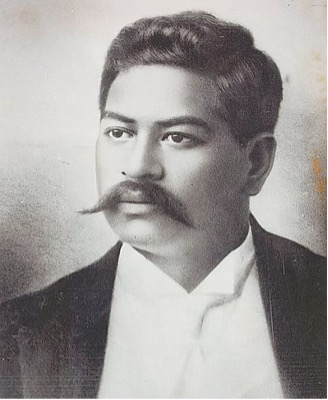
Prince Jonah Kūhiō Kalanianaʻole
(1871-1922)
Prince Jonah Kūhiō Kalaniana‘ole, often referred to as Prince Kūhiō, was a key figure in Hawaiian politics during the territorial era. Born into Hawaiian royalty, he was a nephew of Queen Kapi‘olani and heir to the throne before the monarchy was overthrown. Instead of retreating from public life, Kūhiō adapted and became a voice for his people in the new political landscape.
He served as Hawai‘i’s delegate to the U.S. Congress for two decades, where he authored the Hawaiian Homes Commission Act, securing land for Native Hawaiians to promote cultural preservation and self-sufficiency. His commitment to restoring dignity and resources to Native Hawaiians earned him the nickname “The People’s Kūhiō was also instrumental in creating civic organizations like the Royal Order of Kamehameha and advocating for Hawaiian traditions in a time of cultural suppression. His birthday, March 26th, is a state holiday in Hawai‘i, honoring his dedication to justice, identity, and the future of his people.
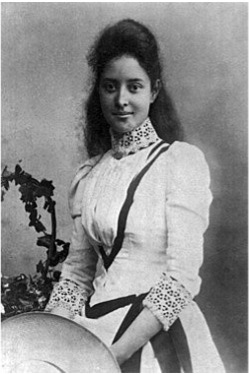
Princess Victoria Kaʻiulani
(1875-1899)
Princess Victoria Kaʻiulani was heir to the Hawaiian throne and a symbol of hope during the kingdom’s most turbulent years. Born to Princess Likelike and Scottish businessman Archibald Cleghorn, Kaʻiulani was educated in England, where she became known for her grace, intelligence, beauty and deep love for her homeland. Scottish novelist Robert Louis Stevenson called her “The Island Rose.”
Following the overthrow of the Hawaiian monarchy, she traveled to the United States to speak out publicly against the annexation of Hawai‘i. Her poise and eloquence won the hearts of many, as she challenged the U.S. government’s actions and shared the struggles of her people on the world stage. Though just a teenager, her courage made a deep impact.
Tragically, Kaʻiulani died at the young age of 23 from inflammatory rheumatism. Yet, in her short life, she became a lasting figure of resistance, pride, and cultural identity. Her story continues to inspire those who stand for justice, dignity, and aloha ʻāina — love for the land and people of Hawai‘i.
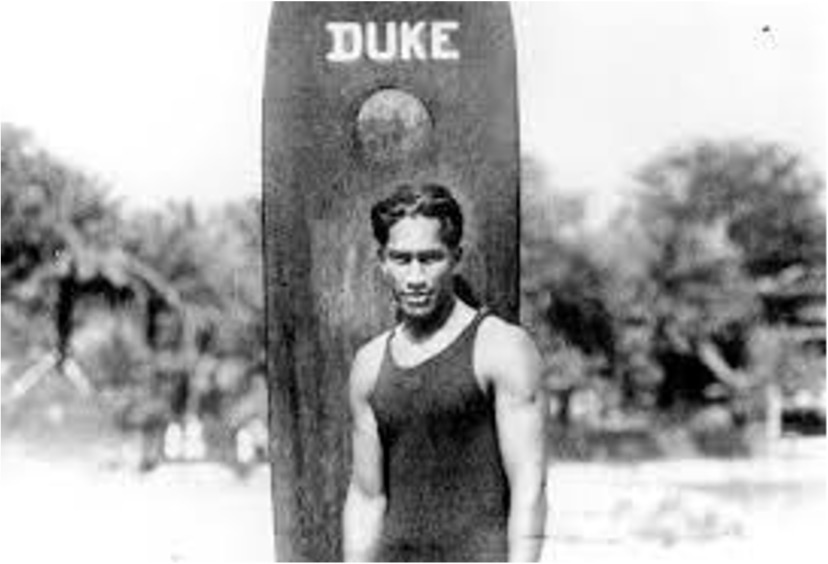
Duke Paoa Kahanamoku
(1890-1968)
Duke Kahanamoku was a legendary Hawaiian swimmer, surfer, and known as the “Ambassador of Aloha.” A five-time Olympic medalist, Duke brought international attention to Hawai‘i through his incredible speed in the water and his warm, humble personality. He is called the “father of modern surfing” for helping to make it a global sport while proudly representing his Hawaiian roots.
More than an athlete, Duke served as sheriff of Honolulu for nearly 30 years and made appearances in Hollywood films, further spreading awareness of Hawai‘i’s culture. He was also known for his heroic ocean rescues and advocacy against racial discrimination, often using his platform to bring people together.
Dukeʻs iconic statue on Waikīkī Beach is one of the most photographed in Hawaiʻi and keeps his spirit alive. The Outrigger Duke Kahanamoku Foundation is a nonprofit organization dedicated to financially supporting the development of individuals and organizations that perpetuate the spirit and legacy of Duke Kahanamoku.